Spirits, Memory and the Things We See in the Dark

Essex country pathway at dusk
Halloween is upon us once again. Ghost stories will be told, supposedly haunted buildings will attract curious visitors, and familiar tales of restless spirits will receive another airing.
But behind the entertainment lies a question that has troubled people for centuries.
What exactly is a ghost?
Throughout October, my Essex After Dark series has explored some of the county's stranger history, from alleged hauntings and witchcraft to places where folklore has become almost inseparable from historical fact.
Some stories can be traced through old documents and newspaper reports. Others survive largely through local tradition. What interests me is why certain accounts endure, sometimes for hundreds of years, while others are forgotten.
And, perhaps more importantly, what people actually experience when they claim to have encountered something supernatural.
When the Dead Returned
Our ancestors generally had little difficulty explaining ghosts. They were the spirits of the dead, returning for reasons that were not always clear.
In medieval England, such appearances were often interpreted through religious beliefs. A departed soul might return to request prayers, confess an injustice or warn somebody of approaching danger.
The Reformation changed how these encounters were understood. Protestant authorities rejected the Catholic doctrine of purgatory, and apparitions were increasingly regarded as superstition, deception or something more sinister.
Yet ghost stories never disappeared.
During the Victorian period, spiritualism brought the subject into fashionable drawing rooms. Séances became popular, mediums claimed to communicate with the dead, and investigators attempted to establish whether anything genuinely supernatural was taking place.
Despite all this attention, the essential question remained unanswered.
Were people encountering the dead, or something else entirely?
Not Every Ghost Behaves Alike
One thing that becomes apparent when examining ghost stories is how different the reported experiences can be.
Some witnesses describe a recognisable figure standing before them. Others hear footsteps, voices or unexplained knocks. Occasionally, somebody reports feeling watched, despite being alone.
There are also stories of apparitions repeatedly appearing in the same location, seemingly unaware of anyone observing them.
Paranormal investigators sometimes call these residual hauntings, suggesting that a past event has somehow left an impression upon its surroundings.
It is an interesting theory, although there is no established scientific evidence that buildings or landscapes can record and replay human experiences.
Nevertheless, it illustrates a problem with the word ghost. We use it to describe experiences that may have little in common.
Perhaps we are trying to explain several different things with one familiar label.

The Cage, St Osyth
The Ghosts of Essex
Essex has no shortage of locations associated with the supernatural.
The Cage at St Osyth is a particularly interesting example. The former village lock-up has acquired an international reputation for paranormal activity, with much of its story connected to Ursula Kemp, one of the women accused during the witch trials of 1582.
Yet there is no surviving documentary evidence establishing that Kemp was imprisoned inside the present building.
The history is real. The association with the building is far less certain.
Colchester Castle offers another example. Accused witches were imprisoned there, and its long history provides fertile ground for stories about the supernatural.
But does knowing that people suffered within a building influence what we expect to experience there?
I believe it can.
Consider somewhere entirely different, such as St Peter's-on-the-Wall at Bradwell-on-Sea. Standing alone beside the Essex coast, the ancient chapel possesses an atmosphere that is difficult to describe.
Visit towards dusk, with the wind coming off the water and the surrounding landscape growing darker, and the place can feel remarkably different.
Nothing supernatural needs to happen. Sometimes history and surroundings are powerful enough on their own.
Can Our Minds Deceive Us?
Human perception is far from perfect.
Our brains constantly interpret incomplete information, particularly in darkness. A shadow becomes a figure, an unfamiliar noise suggests footsteps, and something glimpsed briefly can seem much more substantial than it really was.
There are also recognised experiences that can resemble supernatural encounters.
Sleep paralysis, for example, can leave somebody temporarily unable to move while experiencing vivid hallucinations. Some describe shadowy figures or the overwhelming sensation that another presence is nearby.
Bereavement can produce equally convincing experiences. People sometimes report hearing the voice of a deceased relative or briefly sensing that they are still present.
These experiences are not necessarily signs of illness. They are recognised aspects of human psychology.
Yet explaining certain encounters does not mean that every account can be dismissed in the same way.
Sometimes the circumstances are simply too poorly documented to reach a conclusion.
And that is an important distinction. Something unexplained is not automatically supernatural, but neither should we pretend to know what happened when the evidence is insufficient.
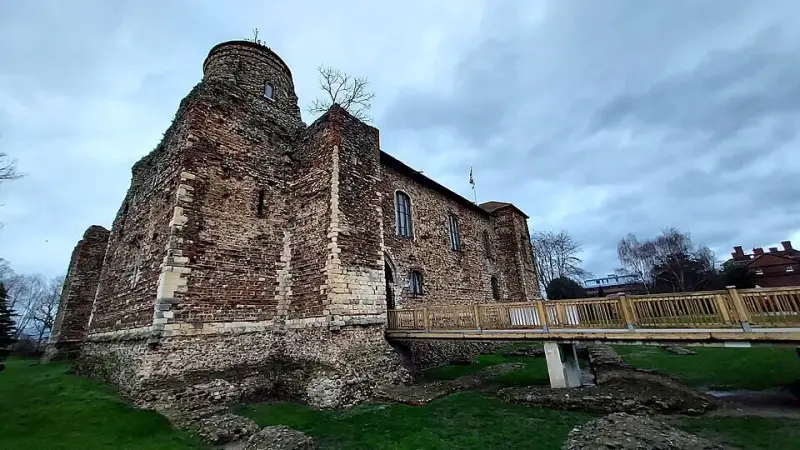
Colchester Castle
The Reluctant Witness
During conversations about ghosts, I have often encountered a familiar opening.
“I don't believe in ghosts, but there was this one time…”
What follows is usually an experience that has remained with somebody for years.
Perhaps they saw something unusual in a familiar room. Perhaps they heard a voice when nobody else was present. Whatever happened, they have never found an explanation that satisfies them.
These accounts interest me because the witnesses are not necessarily people who believe in the paranormal.
Of course, memory is unreliable. Details can change over time, and expectations influence how we interpret events.
But there is little value in ridiculing somebody for describing an experience they genuinely cannot explain.
I would rather hear the account, examine what can be established and leave the question open where necessary.
That approach seems far more useful than immediately declaring an encounter either supernatural or imaginary.
A Mystery Shared Across Cultures
Ghosts are certainly not confined to Britain.
Japanese traditions include yūrei, spirits frequently associated with powerful emotions or unfinished obligations. Chinese folklore contains accounts of hungry ghosts, while many other cultures maintain traditions concerning ancestors who continue to influence the living.
The details differ considerably, reflecting local religions, customs and attitudes towards death.
Yet similar concerns appear repeatedly: loss, injustice, unfinished business and the fear of being forgotten.
Perhaps ghost stories provide a means of expressing feelings that are otherwise difficult to explain.
They can also preserve memories of people and events long after the original circumstances have faded from public knowledge.
In that sense, even a ghost story without a supernatural foundation can possess genuine historical value.
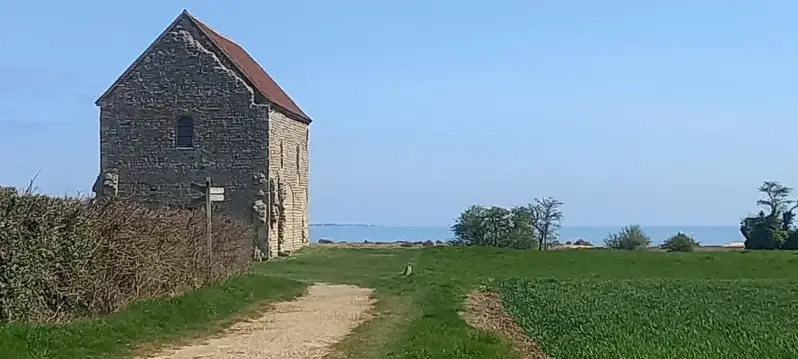
St Peter's-on-the-Wall
What Remains After Dark?
After centuries of speculation, investigations and reported encounters, we still have no generally accepted scientific evidence demonstrating that ghosts are the surviving spirits of the dead.
That does not mean people are inventing every experience.
Something may genuinely have happened, even if the explanation offered afterwards is mistaken.
Throughout Essex After Dark, I have tried to separate historical evidence from folklore without losing sight of what makes these stories so compelling.
Behind a supposedly haunted building there is often a fascinating history. Behind an apparition may lie a forgotten individual, an old tragedy or a story that has changed considerably through generations of retelling.
And sometimes there is simply a witness who experienced something unusual and has never understood why.
As Halloween draws to a close, the old buildings will remain, the stories will continue, and somewhere another person will undoubtedly encounter something they cannot readily explain.
Perhaps we have been asking the wrong question all along.
Rather than assuming we know what a ghost is, perhaps we should begin by asking what somebody actually experienced.
After all, 'ghost' may not be an explanation. It may simply be the name we have given to something we do not yet understand.
Further Reading
Owen Davies, The Haunted: A Social History of Ghosts (2007). An examination of ghost beliefs and reported hauntings in British history.
Shane McCorristine, Spectres of the Self: Thinking About Ghosts and Ghost-Seeing in England, 1750–1920 (2010). Explores changing interpretations of apparitions and supernatural experiences.
Richard Wiseman, Paranormality: Why We See What Isn't There (2011). Investigates psychological explanations for apparently paranormal experiences.
Jacqueline Simpson and Steve Roud, A Dictionary of English Folklore (2000). A useful reference for traditional English supernatural beliefs.
Richard Clements
The History Alchemist
Richard Clements is a writer and independent researcher exploring history, folklore, landscape and the unexplained through The History Alchemist. His work focuses on forgotten places, overlooked events and the stories that continue to echo long after the people who experienced them have gone.
Add comment
Comments