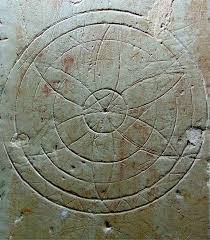
Towards the end of last year I visited St Mary the Virgin at Little Sampford in my home county of Essex, with my friend Darryl. He often comes along on field trips and usually ends up proofreading whatever I write afterwards. We didn’t go with a particular question in mind. It was simply a case of wanting to look more closely at medieval graffiti, and seeing what turned up when we slowed down.
At first, very little was obvious. The interior felt calm, even plain. It was only after a few minutes that the markings began to show themselves. Not on the walls you naturally look at, but around pillars, arches, doorways. Places people pass rather than stop.
Once you notice one mark, others follow. A simple cross. Then another. Circles drawn carefully enough to suggest a tool rather than chance. Initials cut quickly, without ceremony. Some marks were neat. Others barely more than scratches. None of them seemed intended to last, which is perhaps why they do.
Standing there, it became difficult to think of these carvings as anything dramatic. They felt ordinary. Practical, even. This was a working building for centuries, altered and repaired, whitewashed and reworked. Within that setting, scratching a symbol into stone may not have felt like defacement at all.
I left Little Sampford without any urge to explain what the marks meant. That didn’t seem necessary. What mattered more was how easily they disappear if you’re not looking for them, and how quickly they appear once you are. Many churches hold similar traces. They’re just easy to miss.